Iowa Virtual Academy Parents Take Student Nutrition Concerns to Federal Lawmakers in Washington, D.C.
When teachers are personally ordering food for hungry students, families know something needs to change.
That reality has stayed with Sarah Fortin, a teacher at Iowa Virtual Academy (IAVA), who says teachers have ordered DoorDash for students after learning they did not have enough to eat at home.
“We want our students to thrive, but there’s no way they can learn if they’re starving,” Fortin said.
For families whose children attend public school online, access to free and reduced-price meal benefits remains a challenge. While many virtual students meet the same income eligibility requirements as their peers in brick-and-mortar public schools, current U.S. Department of Agriculture (USDA) eligibility guidelines keep those benefits out of reach for students learning from home.
A Challenge Affecting Iowa Families
The issue affects many working families. To qualify for reduced-price school meals during the 2026-27 school year, a family of four can earn up to $59,478 annually.
At IAVA, parents and educators say the challenge is not whether students qualify. The challenge is ensuring eligible virtual public-school students can actually access the support available to them.
Emily Shuberg, an IAVA parent leader and member of Parents for School Options (PSO), has spent the past several years helping advocate for virtual public school families.
“There’s money on the table for our children, and we need to think outside the box on how they can receive this vital benefit,” she said.
Taking Iowa Families’ Concerns to Washington, D.C.
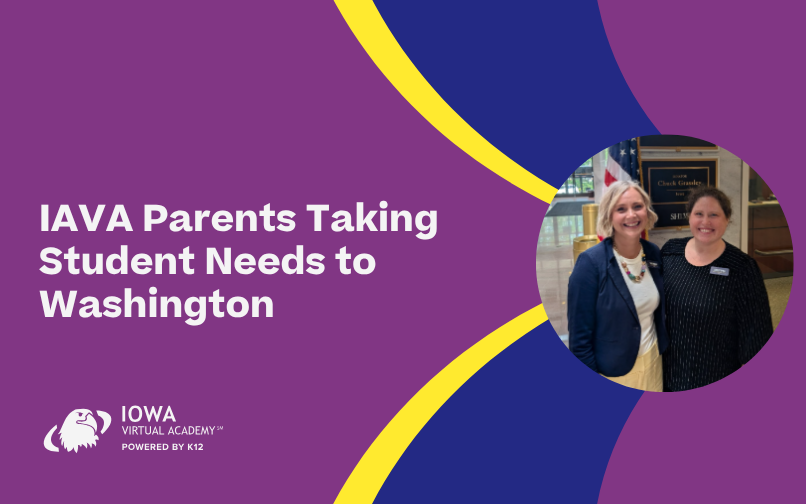
Earlier this year, Shuberg joined other families from K12-powered schools across the country at a parent advocacy conference in Washington, D.C. The Iowa group met with staff from the offices of Iowa Senators Chuck Grassley and Joni Ernst.
The conversations focused on ways policymakers could help eligible virtual public school students access meal benefits. Discussions also explored concerns related to implementation and accountability.
Shuberg said the meetings were productive and provided an opportunity to educate lawmakers and their staff about how online public schools serve students.
“One of the aides we spoke with lived through virtual school during COVID, so she understood how online school works and how it can be positive,” Shuberg said.
Keeping the Focus on Students
For Fortin, the issue goes beyond policy discussions.
“We’re thinking about what our students need and how we help them thrive,” she said
That student-centered mindset is what motivated parents and educators to bring their experiences directly to federal lawmakers. Their goal is to ensure virtual public school students have equitable access to resources that support learning and well-being.
The advocacy effort also reflects a broader commitment to supporting Iowa families who choose public online education. As IAVA celebrates its 15th anniversary this year, school leaders say they will continue working with parents to elevate student needs and share their experiences with policymakers.
Learn More
Interested in learning more about Iowa Virtual Academy (IAVA) and how the school supports students across Iowa? Visit the IAVA website.
Back to BlogRelated Blog Posts

Embracing the Benefits of Online Learning at Iowa Virtual Academy
At Iowa Virtual Academy (IAVA), we believe in providing a structured, high-quality education that aligns with […]

Supporting Your Child’s Education Journey at Iowa Virtual...
At Iowa Virtual Academy (IAVA), we are committed to providing a supportive and personalized learning experience […]

The Path to Success: How Iowa Virtual Academy Prepares...
At Iowa Virtual Academy (IAVA), our mission is to deliver an education that meets academic standards […]